
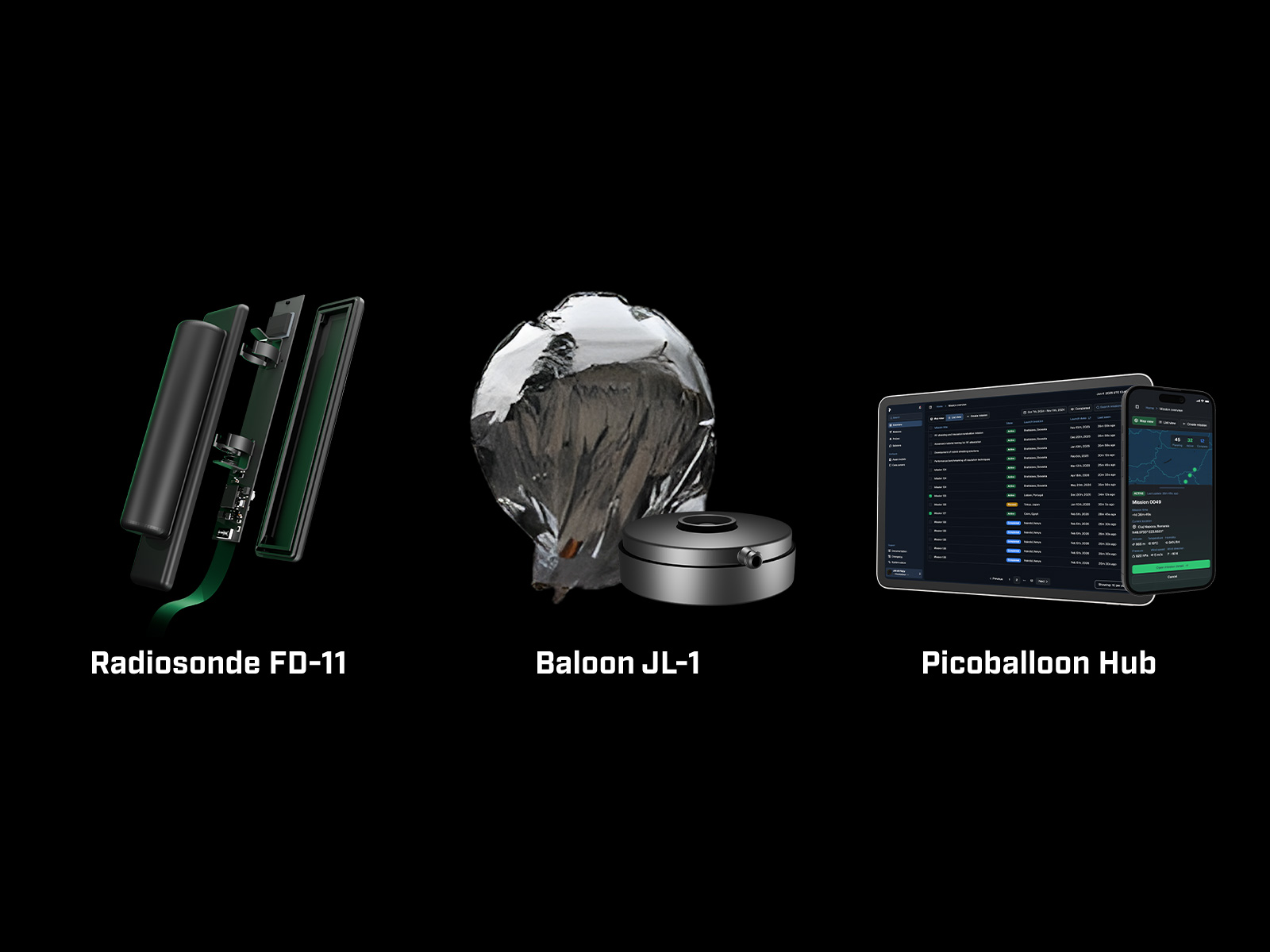
The Picoballoon system is a next-generation atmospheric observation solution designed to deliver maximum-quality environmental data at a fraction of traditional operating costs. Built around three seamlessly integrated elements - a miniaturized ultralight radiosonde, a long-duration superpressure balloon, and a powerful cloud-based mission hub - it enables continuous, high-accuracy atmospheric measurements with minimal logistics.
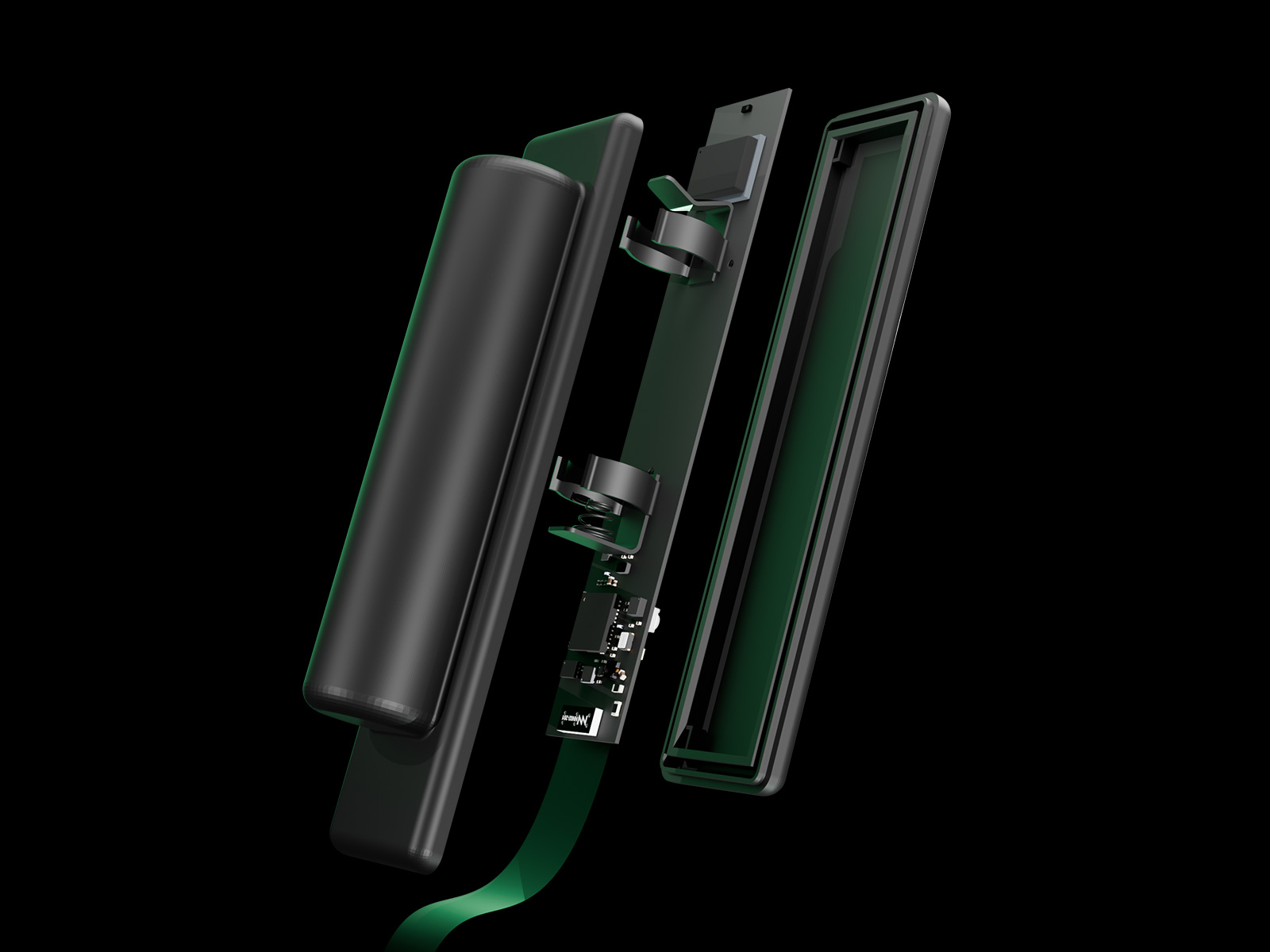
At its core is the FD-11 ultralight radiosonde, engineered for extreme efficiency. Despite weighing only 10 g, it provides industry-standard meteorological measurements and more than 20× the data volume compared to conventional sondes, all thanks to low-power hardware, extended operation time, and advanced sensing capabilities.
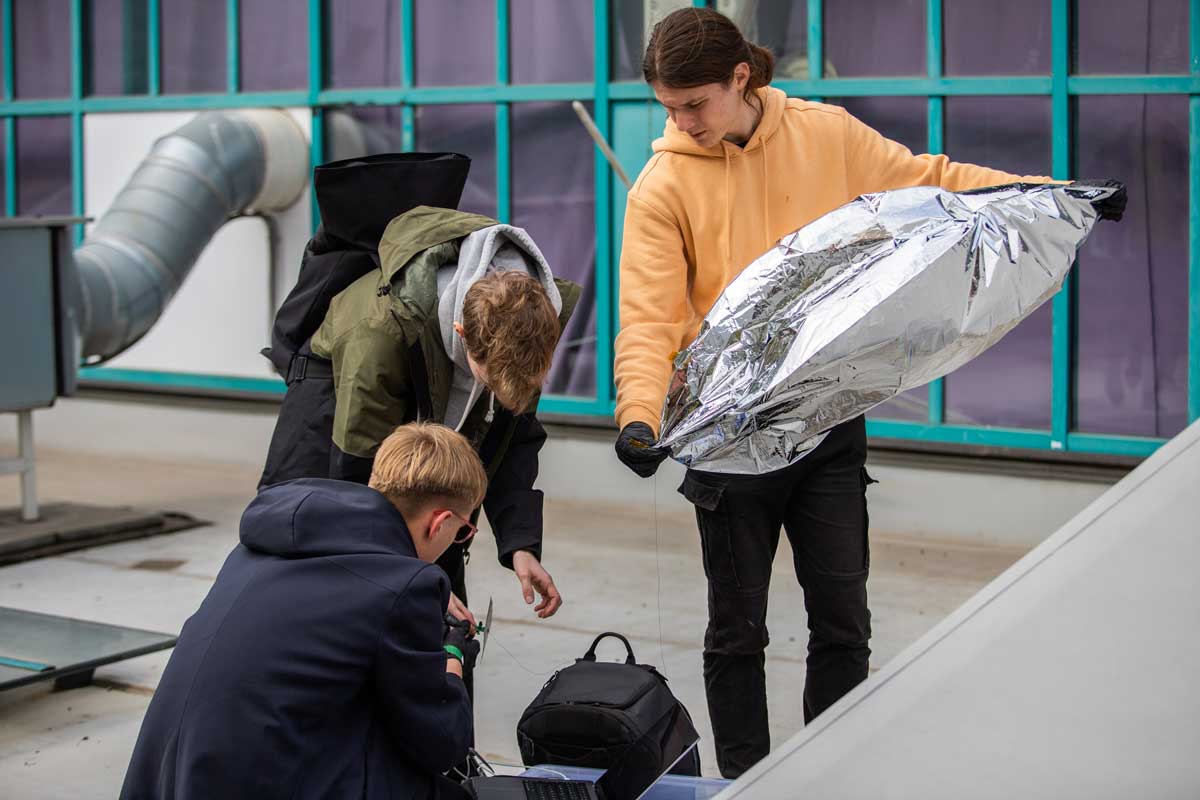
The JL-1 superpressure balloon delivers unprecedented flight duration - up to 50 days - and uses 96 % less lifting gas than standard systems. Featuring aerospace-grade TritaX film and a precise composite valve, the balloon maintains stable float conditions and allows operators to tune float altitude or ascent rate for targeted atmospheric sampling.
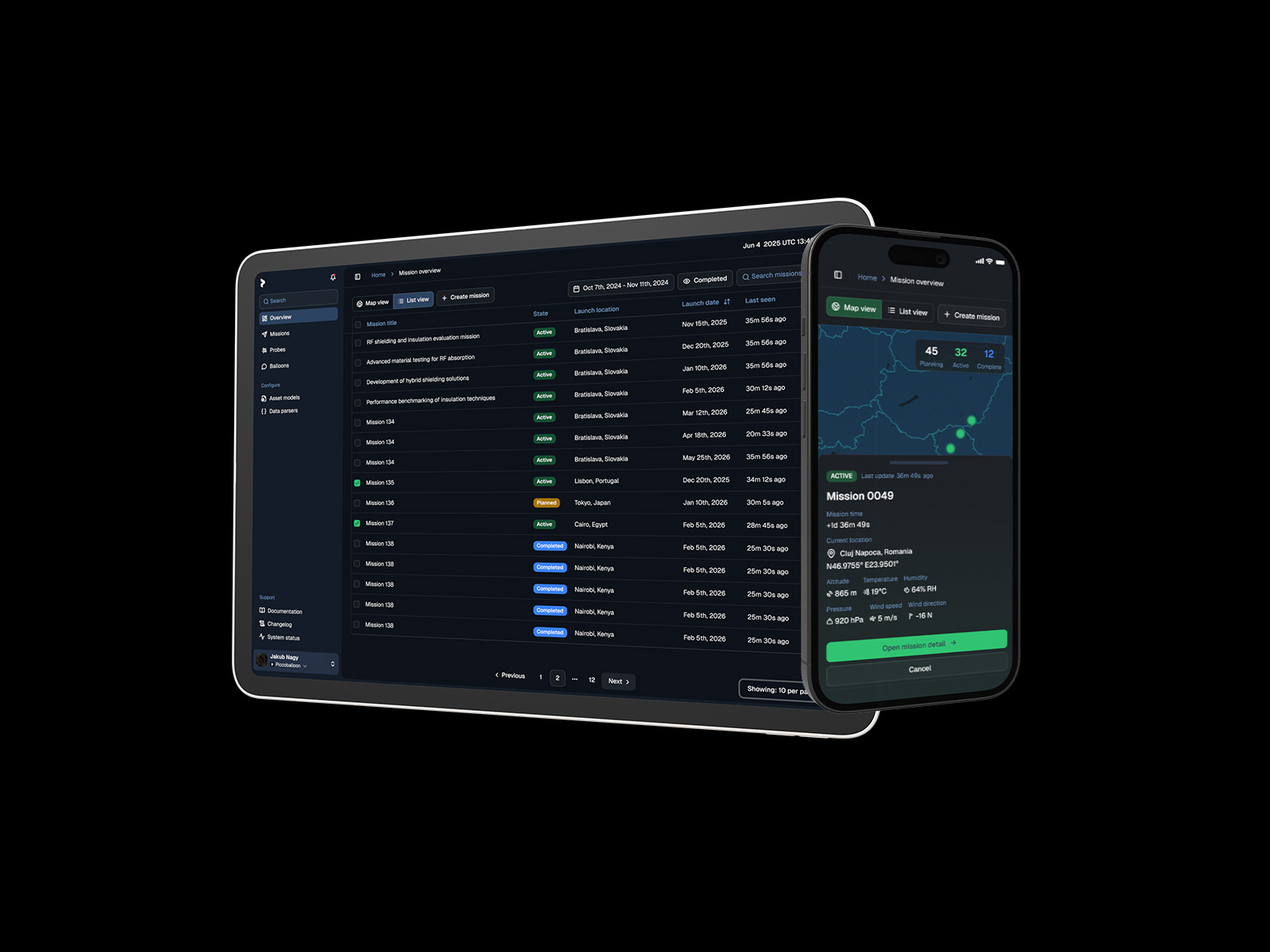
Completing the ecosystem is the Picoballoon Hub, a cloud-first operations platform that manages the entire lifecycle of launches. It offers mission planning, tracking, radiosonde configuration, inventory, analytics, and global LoRaWAN-based data reception - eliminating the need for ground stations and making high-altitude monitoring accessible from any device.
Together, these three elements create a fully integrated, scalable, and cost-effective system for long-duration atmospheric research, operational meteorology, and innovative environmental applications.